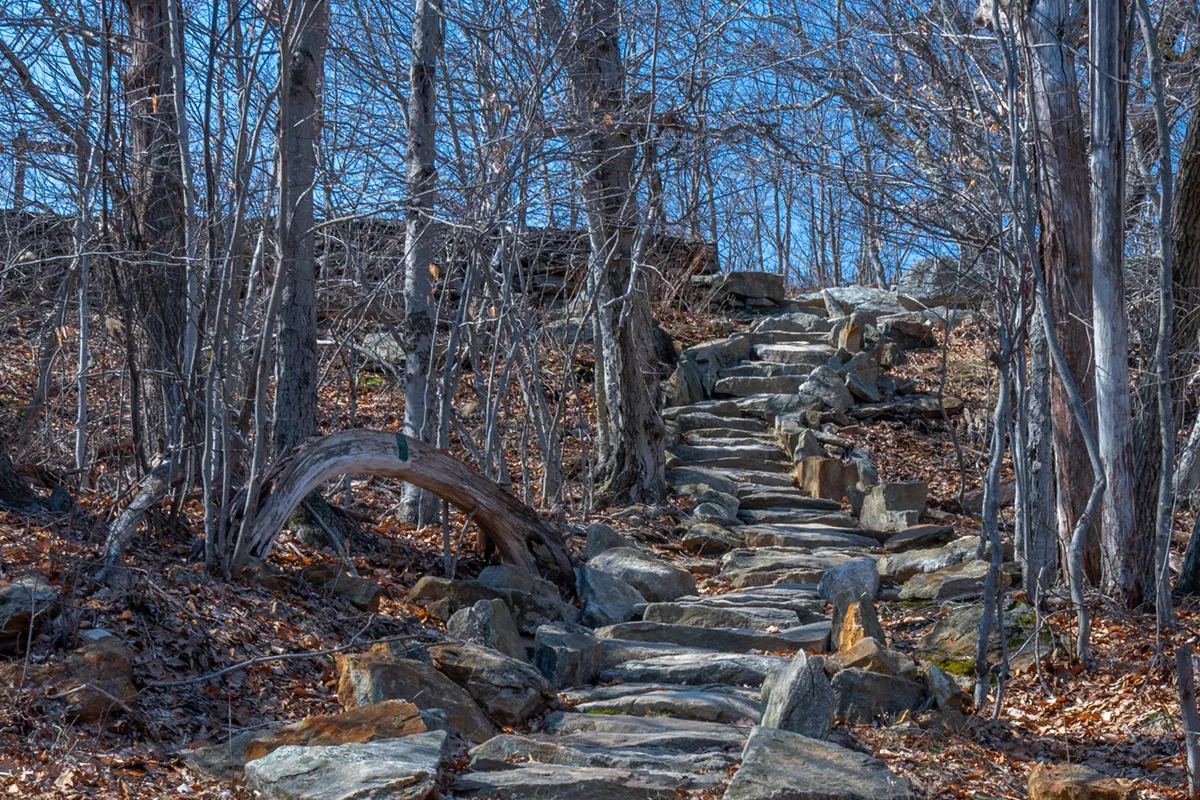
The Best Local Trails + How to Prep Your Body for Them
As the weather warms up in Massachusetts, more people are looking for ways to take their movement outside. That might look like walking through your neighborhood, finding a quiet trail, or simply stepping away from your usual routine for some fresh air.
While nothing beats the fresh air and vitamin D that comes with outdoor exercise, transitioning from a controlled indoor environment to uneven terrain requires a body that is both resilient and adaptable.
The Benefits of the Great Outdoors
Exercising outside offers more than just a change of scenery. Research consistently shows that “green exercise” can:
- Boost Mental Clarity: Nature acts as a natural stress-reducer, lowering cortisol levels so you feel relaxed and refreshed.
- Challenge Your Stability: Unlike a flat treadmill or a polished floor, outdoor surfaces like grass or dirt are unpredictable, forcing your stabilizer muscles to work harder.
- Increase Energy: Just 20 minutes of fresh air has been shown to provide an energy boost equivalent to a cup of coffee.
Best Parks and Trails in Central Mass
If you are looking to move outdoors, this part of Mass. has more options than you think.
Some local favorites include:
- Harvard Conservation Trust
For 50 years, the Harvard Conservation Trust has worked to acquire, preserve and protect the natural beauty of Harvard. Explore the properties and trails across more than 1,100 acres of protected conservation land in Harvard.
- Farandnear in Shirley
Along its easy wooded trails, you’ll find fields of wildflowers, an arboretum full of more than 80 cool conifer trees, the remnants of an old cranberry bog, and Paradise, a 10-acre parcel where huge hemlocks grow. - Wachusett Mountain State Reservation – Princeton, MA
The 3,000-acre Wachusett Mountain State Reservation offers plenty of natural and recreational opportunities. You can hike and bike trails in the summer and ski in the winter. Enjoy the scenic views from this 2,006-foot peak. - Leominster State Forest –
From hiking and mountain biking to rock climbing and fishing, Leominster State Forest has everything for outdoor enthusiasts. Hike a segment of the 95-mile Midstate Trail or take a dip in Crow Hill Pond.
How Pilates Supports Your Outdoor Goals
Whether you are training for a local 5K, spending a Saturday kayaking, or simply enjoying a long walk, a consistent Pilates practice is the “secret sauce” to moving safely and efficiently.
- Stability on Uneven Ground Nature doesn’t come with a level. When you’re hiking or trail running, your ankles and knees are constantly adjusting to rocks and roots. Pilates emphasizes footwork and lower-body alignment, which builds the proprioception needed to prevent trips and rolls.
- Improved Respiratory Stamina The lateral breathing we practice in the studio—expanding the ribs while maintaining core engagement—is a game-changer for uphill climbs. It allows for maximum oxygen intake even when your muscles are under tension, helping you reach the summit without feeling winded.
- Functional Posture for Cyclists and Gardeners Activities like cycling or weeding often involve long periods of forward leaning, which can lead to “tech neck” or lower back strain. Pilates focuses on spinal extension and postural muscles, ensuring that your back stays supported and your chest stays open, no matter how long you’re in the saddle or the soil.
- Efficiency of Movement In the classical method, we learn to move from the “Powerhouse.” When your movement originates from a strong center, your limbs don’t have to work as hard. This means you can hike further, paddle longer, and recover faster.
The Takeaway: Don’t think of Pilates and outdoor activities as separate goals. Think of your time in the studio as the “rehearsal” for your performance in the Great Outdoors. When your core is strong, the whole world becomes your playground!
Keep on moving,
Kim & The Bodylines Team