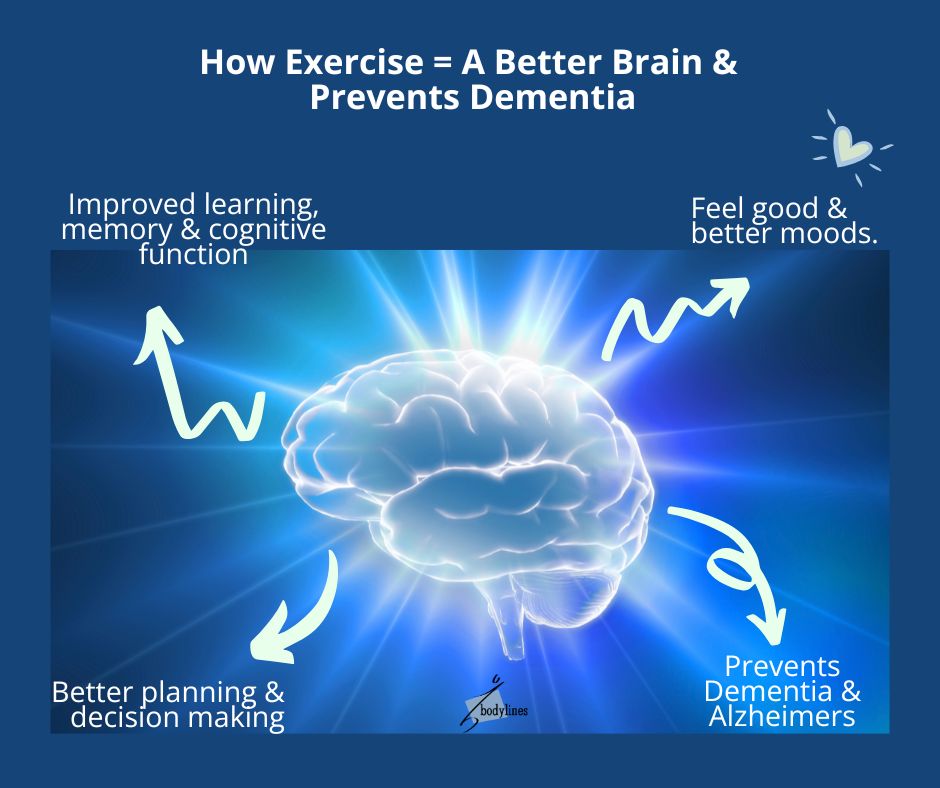
Cognitive Health: How Exercise = a Better Brain & Help Prevent Dementia
For centuries, physical activity has been recognized for its benefits to cardiovascular health, muscle strength, bone density and weight management. However, more recent research shows that the impact of exercise extends far beyond the physical, deeply influencing our cognitive abilities, emotional well-being, and resilience against neurodegenerative diseases like dementia. A growing body of compelling scientific evidence reveals that regular physical activity acts not only enhance our current mental state but also builds a vital reserve against the debilitating effects of cognitive decline in later life.
One of the most significant effects of exercise on the brain is the increased production of Brain-Derived Neurotrophic Factor (BDNF), often dubbed “Miracle-Gro” for the brain. BDNF is a crucial protein that supports the survival, growth, and differentiation of new neurons (neurogenesis) and strengthens the connections between existing ones (synaptic plasticity). These processes are fundamental for learning, memory formation, and overall cognitive function. When we engage in physical activity, the muscles release signaling molecules that travel to the brain, stimulating the synthesis and release of BDNF. This surge of neurotrophic support not only helps to maintain the health of existing brain cells but also encourages the creation of new ones, effectively bolstering the brain’s structural integrity and capacity.
In addition, exercise has been consistently shown to increase the levels of endorphins, natural mood elevators that can alleviate feelings of stress, anxiety, and depression. These “feel-good” chemicals bind to opioid receptors in the brain, producing a sense of euphoria and well-being. Beyond endorphins, exercise also influences the levels of other key neurotransmitters such as serotonin and dopamine, which are heavily involved in mood regulation, motivation, and reward pathways. By modulating these neurochemical messengers, regular physical activity can act as a powerful natural antidepressant and decrease anxiety.
The structural benefits of exercise on the brain are equally compelling. Studies utilizing advanced neuroimaging techniques, such as magnetic resonance imaging (MRI), have demonstrated that physically active individuals tend to have larger gray matter volume in key brain regions crucial for cognitive function, including the hippocampus (involved in memory) and the prefrontal cortex (responsible for executive functions like planning, decision-making, and working memory).
Moreover, exercise improves cerebrovascular health, ensuring that the brain receives an adequate supply of oxygen and blood flow. This improved blood flow not only nourishes brain cells but also facilitates the removal of metabolic waste products, contributing to healthier and more efficient cognitive functioning. Conversely, a sedentary lifestyle can lead to impaired cerebrovascular function, increasing the risk of vascular dementia and exacerbating the progression of other neurodegenerative conditions.
The impact of exercise on stress response is another crucial pathway through which it benefits mental health and indirectly protects against cognitive decline. Chronic stress can have detrimental effects on the brain, leading to the release of stress hormones like cortisol, which can damage neurons and impair cognitive function, particularly memory. Regular physical activity helps to regulate the body’s stress response system, making individuals more resilient to stressors. Exercise can lower baseline cortisol levels and improve the brain’s ability to cope with stressful situations, thereby mitigating the negative impact of chronic stress on brain health and mental well-being.
The accumulating evidence strongly suggests that regular exercise plays a significant role in reducing the risk of developing dementia, including Alzheimer’s disease.
Furthermore, exercise addresses other health factors that are known to have an impact on cognitive decline. By improving cardiovascular health, lowering blood pressure, reducing cholesterol levels, and improving insulin sensitivity, physical activity helps to prevent the cerebrovascular damage that can contribute to vascular dementia and & Alzheimer’s disease.
Beyond its direct effects on brain structure and function, exercise also promotes healthier lifestyle habits that are beneficial for both mental and cognitive well-being. Physically active individuals are more likely to maintain a healthy weight, engage in better sleep patterns, and have a greater sense of social connection, all of which contribute to overall health and can indirectly reduce the risk of dementia. Moreover, engaging in exercise often fosters a sense of accomplishment and self-efficacy, which can positively impact mood and motivation, further contributing to mental resilience.
In conclusion, the scientific evidence overwhelmingly supports the profound and multifaceted benefits of exercise for the brain and mental health, as well as its crucial role in preventing or delaying the onset of dementia. Embracing a physically active lifestyle is not just about physical fitness; it is an investment in our cognitive future and a vital strategy for safeguarding our mental well-being and resilience against the shadows of dementia. The symphony of movement truly orchestrates a healthier, sharper, and more resilient brain, allowing us to navigate life’s challenges with greater clarity and vitality.
Sources & related content:
The Benefits of Exercise for Brainpower
Brain Basics: Know Your Brain | National Institute of Neurological Disorders and Stroke
Heart Health Benefits of Physical Activity | UCSF Health
Mice on Wheels Show Scientists How Exercise Benefits Their Brains | NYU Langone News
Frontiers | Exercise-Mediated Neurogenesis in the Hippocampus via BDNF
Frontiers | Rejuvenating the Brain With Chronic Exercise Through Adult Neurogenesis
Exercise for Mental Health – PMC
Role of Physical Activity on Mental Health and Well-Being: A Review – PMC
Possible Neuroprotective Mechanisms of Physical Exercise in Neurodegeneration – PMC
Wrapping up, it’s clear that getting active is a game-changer for your health. It’s not just about losing weight or building muscle; exercise touches everything from your heart’s health to your mental clarity. History shows us that movement was once a natural part of our day, but now, with so much sitting around, we’ve got to make a conscious effort to get moving. It pays off big time – your heart works better, your metabolism kicks into higher gear, and your brain stays sharp. And the best part? You don’t have to run marathons to see the benefits. Just find ways to sneak more activity into your day, like choosing the stairs over the elevator, and keep it consistent. It’s about making your body feel good for the long haul so you can enjoy life to the fullest. Per this article: The Remarkable Power of Exercise on Our Health: A Comprehensive Overview